26th ALNAP Meeting
The role of national governments in international humanitarian response to disasters
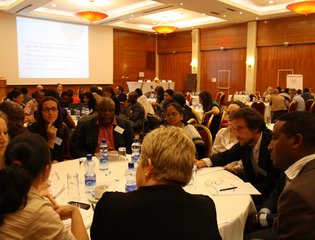
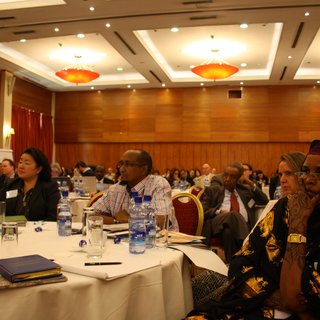
The 26th ALNAP Meeting will focus on the relationship between the international humanitarian system and national governments. Building on existing and new research by ALNAP and others, the meeting will bring together a range of key humanitarian and government actors with the specific aim of exploring better ways of collaborating in disaster response.
Hosted by the Red Cross/ Red Crescent Movement and supported by Mercy Malaysia, the meeting will take place between 16th-18th November 2010 in Kuala Lumpur
We look forward to welcoming ALNAP full members to join us for this agenda setting meeting in the humanitarian calendar. The meeting concept note is available to read here and more information can be found on the meeting here.
Surging food prices hit food security across the world
Rising food prices are having an impact on humanitarian operations around the world. This report from Bloomberg highlights that the U.N. Food and Agriculture Organization's food price index -- which includes grains, meat, dairy and other items in 90 countries -- was up 22 percent in March from a year earlier. In some Asian markets, rice and wheat prices are 20 to 70 percent above 2008 levels.
With food consuming up to 70 percent of family income in the poorest countries, rising prices are squeezing household budgets and threatening to worsen malnutrition.
The ALNAP Lessons paper, The Global Food Price Crisis: Lessons and Ideas for Relief Planners and Managers may prove useful for agencies planning humanitarian operations in the context of rising food prices.
ALNAP Innovations Case Studies
ALNAP has published the firth in our new Innovations Case Study series, which aims to highlight and promote specific innovations across the humanitarian sector, as well as to help organisations better understand innovations processes and how they can be better implemented. These new ALNAP information products build on the Humanitarian Innovations Fair that took place at the 25th ALNAP Meeting in London.
Case Study No. 5 - Transitional shelter: understanding shelter from the emergency through reconstruction and beyond
Transitional Shelter is a pioneering approach to the provision of shelter in emergency response, recovery and reconstruction. The approach of transitional shelter acknowledges that reconstruction takes usually between two and five years, but that a tent only lasts around one year.
The approach is not another phase of response: rather, it involves building and upgrading incrementally, from materials that offer immediate shelter such as plastic sheeting or sustainable local materials. This Innovation Case Study highlights the development of the transitional-shelter approach, using recent examples from several implementing agencies.
The previous case studies in the ALNAP Innovations Case Study series are:
Case Study No. 1 - Cash Transfers through Mobile Phones: An Innovative Emergency Response in Kenya
Concern Worldwide has pioneered the use of M-PESA for emergency cash transfers in Kenya and this study highlights Concern’s experience, which shows that despite initial software and logistical challenges, mobile phone technology offers a unique and empowering approach to efficiently deliver. In addition, the partnership between Concern and Safaricom demonstrates that the private sector has significant and unique abilities to enhance the effectiveness of emergency response, and more importantly they can do so while maintaining their core business principles.
Click here to download Case Study No 1.
Case Study No. 2 - The Livestock Emergency Guidelines and Standards: Improving the Quality of Emergency Response through Livelihoods-based Standards
The Livestock Emergency Guidelines and Standards (LEGS) project aims to increase the quality of emergency response by promoting minimum standards for livestock-based interventions.The Standards follow the format of the Sphere handbook and covers a range of livestock-based interventions – destocking, feed, water, veterinary services and restocking – as well as support and guidance on livelihoods-based needs assessment and identification of appropriate, timely and feasible emergency responses.
Click here to download Case Study No 2.
Case Study No. 3 - Last Mile Mobile Solutions: Technology and Partnering for Social Innovation
World Vision and its Information Technology (IT) partners have developed innovative software for use on robust mobile computers to meet an unmet need in humanitarian applications. The Last Mile Mobile Solutions (LMMS) initiative focuses on field-based data collection, management and analysis processes in an effort to eliminate duplication, streamline business variations, and remove complexity. Positive outcomes have led to overwhelming support from within World Vision and partners for the expansion of these innovations.
Click here to download Case Study No 3.
Case Study No. 4: Supporting community-based emergency response at scale: innovations in the wake of Cyclone Nargis
The case study examines the innovative grants dispersal process and information sharing mechanisms put in place in the wake of Cyclone Nargis, which struck Myanmar in 2008. It describes how appropriate support for local civil-society interventions following a rapid-onset emergency can enable very fast and responsive relief at scale.
Click here to download Case Study No 4.
Justin Corbett, the author of the case-study, is currently exploring the potential for similar processes of innovative support to civil society organisations in Haiti. Anyone interested in this work should contact him on: +33 (0)4 79064755, skype: Kerrenlynn or email: jjcroving@gmail.com